

How to Build a Sustainable Capsule Wardrobe

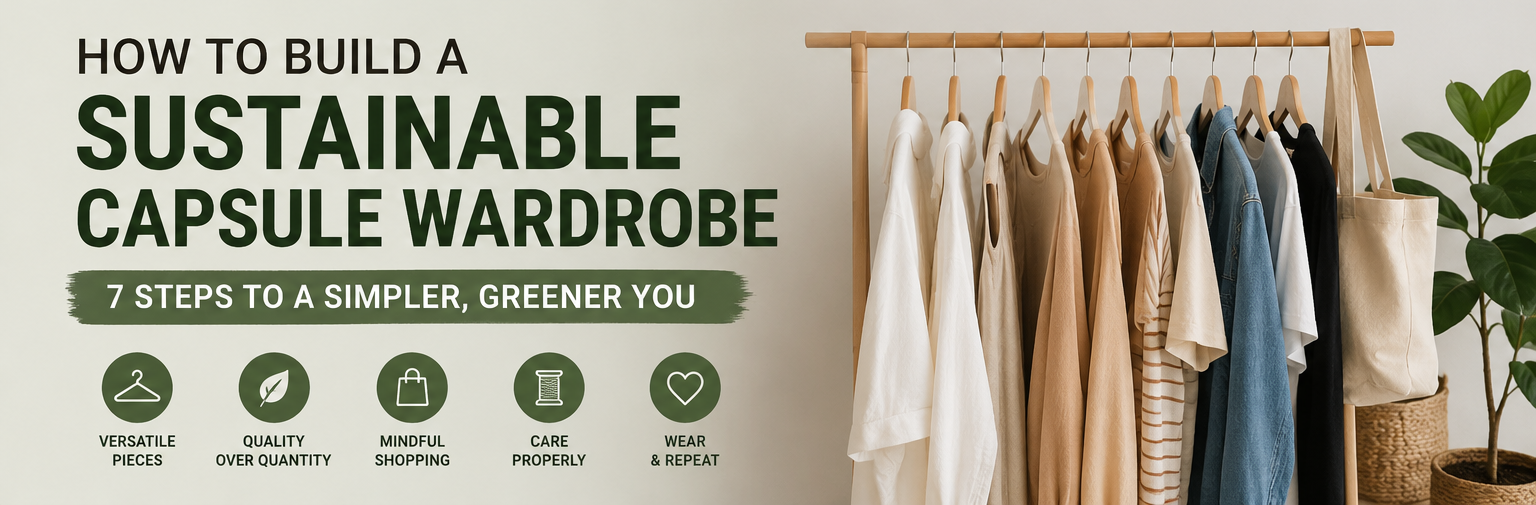
How to Build a Sustainable Capsule Wardrobe: A Step-by-Step Guide
To build a sustainable capsule wardrobe, keep a smaller collection of versatile clothes that fit your lifestyle, work well together, and can be worn repeatedly. Start with the garments you already own, identify any genuine gaps, and add durable pieces gradually.
What Is a Capsule Wardrobe?
A capsule wardrobe is a focused collection of clothing that can be mixed and matched to create many outfits. It usually contains everyday essentials, seasonal layers, footwear, and a limited number of statement pieces.
A capsule wardrobe does not require wearing only neutral colors or owning an exact number of garments. Its purpose is to keep clothes that are useful, wearable, and suitable for your real life.
Why Build a Sustainable Capsule Wardrobe?
A sustainable capsule wardrobe combines versatility with responsible consumption. Instead of repeatedly buying trend-driven clothing, you build a wardrobe around garments that can be worn often and maintained for longer.
Potential benefits include:
- Fewer unnecessary purchases
- Less clothing waste
- Easier outfit planning
- Better use of the garments you already own
- More thoughtful spending
- A clearer and more consistent personal style
Step 1: Review Your Existing Wardrobe
Begin with what you already own. Take out your clothes and review each item based on fit, condition, comfort, usefulness, and how frequently you wear it.
Separate your clothes into five groups:
- Keep: Items you wear regularly
- Repair: Useful garments that need minor fixes
- Alter: Pieces that could work with a better fit
- Donate or resell: Wearable items you no longer need
- Recycle: Damaged textiles that cannot be reused
Do not discard clothes simply because they do not match a perfect capsule wardrobe aesthetic. The most sustainable starting point is usually the clothing you already have.
Step 2: Define Your Lifestyle and Clothing Needs
Your capsule wardrobe should reflect your actual routine, climate, workplace, social activities, and personal style.
Ask yourself:
- What do I wear most days?
- Does my work require formal or casual clothing?
- What is the climate where I live?
- How often do I attend special occasions?
- Which garments make me feel comfortable and confident?
Someone working from home will need a different capsule wardrobe from someone who regularly attends formal meetings.
Step 3: Choose a Practical Color Palette
A coordinated color palette makes it easier to combine different pieces. Start with a few base colors you already wear and add accent colors that reflect your personality.
Common base colors include:
- Black
- White
- Beige
- Brown
- Grey
- Navy
Neutral colors are useful, but they are not mandatory. Your capsule can include patterns and brighter colors as long as the garments work well together.
Step 4: Select Versatile Wardrobe Essentials
Choose pieces that can be worn in several combinations and adapted for different settings.
A practical capsule wardrobe may include:
- Comfortable everyday tops
- Well-fitting shirts or blouses
- One or two reliable pairs of trousers or jeans
- A versatile skirt or dress
- A lightweight layering piece
- A durable jacket or coat
- Comfortable everyday footwear
- One smarter option for formal occasions
Use this as a flexible framework rather than a compulsory shopping list. Only include categories that match your lifestyle.
Step 5: Choose Quality Materials and Construction
Material choice matters, but fabric type alone does not determine whether a garment is sustainable. Consider durability, production methods, comfort, care requirements, and how often you will wear the item.
Materials commonly considered for capsule wardrobes include:
- Organic or responsibly sourced cotton
- Linen
- Hemp
- Responsible wool
- Lyocell
- Recycled fibers
Before purchasing, inspect:
- Stitching quality
- Seam strength
- Fabric thickness and feel
- Buttons, zippers, and closures
- Care instructions
- Whether the garment can realistically be repaired
Step 6: Shop Mindfully and Fill Only Genuine Gaps
After reviewing your wardrobe, write down the specific items you are missing. Avoid rebuilding your entire wardrobe at once.
Before buying something, ask:
- Do I already own something similar?
- Can I create at least three outfits with this item?
- Does it fit my lifestyle and local climate?
- Will I be comfortable wearing it regularly?
- Is the construction suitable for long-term use?
- Can I care for it without difficulty?
Second-hand clothing, clothing swaps, repairs, tailoring, and responsible brands can all help fill wardrobe gaps without relying only on newly produced clothing.
Step 7: Care for Your Clothes Properly
A capsule wardrobe becomes more sustainable when its garments remain wearable for a long time.
- Follow the garment’s care label
- Wash only when necessary
- Use suitable washing temperatures
- Air-dry when the fabric allows it
- Store garments clean and dry
- Repair loose buttons, seams, and small tears early
- Rotate frequently worn garments
Example of a Small Capsule Wardrobe
The ideal number of garments depends on your lifestyle, but the following example shows how a simple collection could be organized:
- 5 everyday tops
- 3 shirts or blouses
- 3 pairs of trousers or jeans
- 2 skirts or dresses
- 2 sweaters or cardigans
- 2 jackets or outer layers
- 3 pairs of shoes
- 1 formal or occasion outfit
This is only an example. You may need more or fewer items depending on laundry frequency, seasons, work requirements, and personal preferences.
Frequently Asked Questions
How many clothes should a capsule wardrobe contain?
There is no required number. Some people use around 30 to 50 items, while others need more or fewer. The right number is the smallest practical collection that supports your lifestyle without creating unnecessary restrictions.
Can a capsule wardrobe include colorful clothing?
Yes. A capsule wardrobe can include any colors, prints, and styles. Coordination and regular use matter more than following a neutral aesthetic.
Do I need to buy new clothes to create a capsule wardrobe?
No. Begin with your existing wardrobe and purchase only when you identify a genuine gap. Reusing what you already own is usually the most responsible starting point.
Can I create a capsule wardrobe on a budget?
Yes. Use existing clothes, repair or alter useful garments, shop second-hand, attend clothing swaps, and add new items slowly instead of replacing everything at once.
How often should I update my capsule wardrobe?
Review it when your season, body, work, climate, or lifestyle changes. There is no need to replace items according to a fixed schedule.