

Sustainable Fashion in Nepal: The Complete 2026 Guide

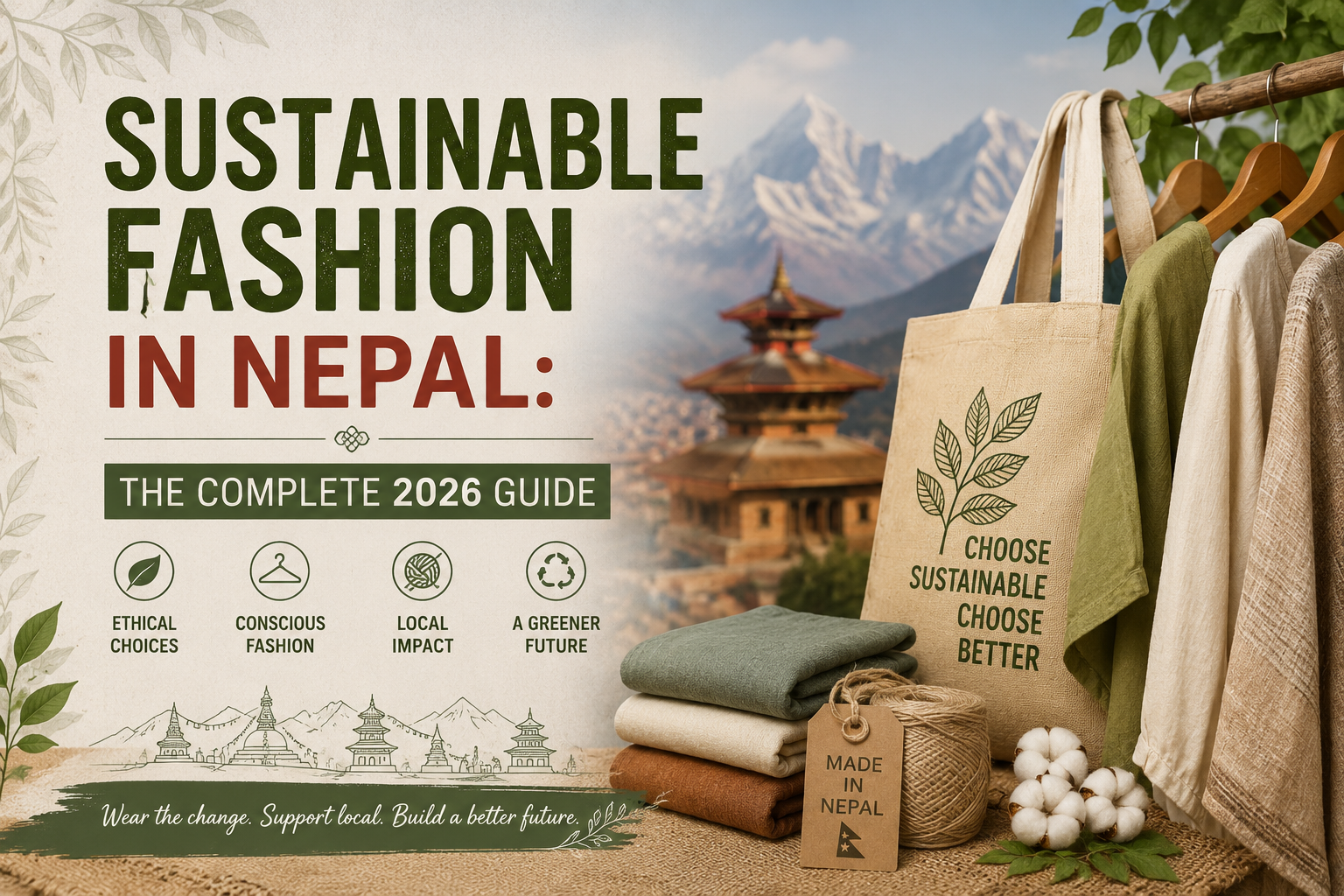
Nepal has quietly become one of South Asia’s more interesting places to watch for sustainable fashion. Long before “eco-conscious” became a marketing term, Nepali artisans were hand-weaving textiles from hemp, nettle, and bamboo, using techniques passed down through generations rather than industrial shortcuts. Today, that heritage is meeting modern design, creating a growing community of labels genuinely trying to make clothing that lasts longer and costs the planet less.
This guide breaks down what sustainable fashion actually looks like in Nepal in 2026 the materials, the people behind it, how to tell a genuine practice from a marketing claim, and where to look if you want to buy into it.
What Sustainable Fashion in Nepal Actually Means
“Sustainable fashion” is used loosely, so it helps to define it in the Nepali context. In practice, it usually involves some combination of:
- Natural, low-impact fibers: hemp, allo (Himalayan nettle), bamboo, organic cotton, and wool sourced from local farms
- Made-to-order or small-batch production, which avoids the overproduction and unsold stock that drives fast fashion waste
- Zero-waste or low-waste pattern cutting, where garments are designed to minimize offcuts during production
- Handcraft over mass manufacturing, preserving skills like hand-weaving and natural dyeing
- Fair, safe working conditions, often with a focus on employing and training women
No single label ticks every box perfectly, and that’s worth saying plainly: sustainability in fashion is a direction, not a finish line. The more useful question isn’t “is this brand 100% sustainable?” but “which specific, verifiable practices does this brand follow?”
Nepal’s Textile Heritage: The Real Foundation
What makes Nepal distinct from many countries riding the sustainability trend is that it isn’t starting from zero. Traditional Nepali textile culture was resource-conscious by necessity long before it was fashionable.
Dhaka weaving, hand-spun allo fiber, and felted wool products have existed in Nepali communities for centuries, produced with minimal machinery and largely biodegradable materials. Contemporary Nepali designers are increasingly drawing on this heritage rather than importing a Western “eco” aesthetic wholesale, pairing traditional weaving or natural fibers with more modern, wearable silhouettes.
This matters for anyone evaluating claims of sustainable fashion in Nepal: brands rooted in this craft tradition tend to have a more coherent, verifiable story than newer entrants simply attaching sustainability language to standard production methods.
How to Spot Genuine Sustainable Fashion (vs. Greenwashing)
Greenwashing is a real risk in a growing market, and Nepal is not immune to it. Before assuming a label is genuinely sustainable, look for specifics rather than adjectives.
Green flags:
- Named materials (hemp, allo, organic cotton) rather than vague “eco-fabric” claims
- Transparency about what isn’t solved yet; no brand should claim to be 100% waste-free
- Visible production model: made-to-order, small-batch, or documented supply chain
- Evidence of fair labor practices, particularly for artisans and seamstresses
Red flags:
- Sustainability claims with no explanation of process or materials
- Mass-produced tourist-market items labeled “eco” purely because they’re handmade-looking
- No mention of production volume, sourcing, or waste handling
Brands that publish their actual practices, even imperfect ones, are generally more trustworthy than those relying on sustainability as a slogan. Marsyangde’s sustainability page, for example, is a useful reference point for what this kind of transparency looks like in practice: made-to-order production, zero-waste pattern exploration, offcut reuse, and an explicit acknowledgment that sustainability is an ongoing process rather than a completed claim.
Where Sustainable Fashion in Nepal Comes From
Kathmandu and the surrounding valley host most of the country’s sustainable and slow-fashion activity, largely through small, independent studios rather than large factories. Common threads across genuinely sustainable Nepali labels include:
- Founders who are frequently women, often designing specifically for women
- A preference for natural or low-impact fibers over synthetic blends
- Small production runs tied to actual demand rather than speculative stock
Marsyangde is one example of this model in practice: a Nepal-rooted, women-led label built around made-to-order production and reversible, versatile garments designed for longer use rather than single-season wear. Its sustainable and versatile design collections reflect the broader pattern-cutting and reuse principles described above, offering a practical look at how these ideas translate into finished clothing.
A Practical Framework for Shopping Sustainable Fashion in Nepal
If you’re evaluating a purchase, whether browsing online or visiting Nepal, a simple decision framework helps:
- Ask about the material. Natural fiber, low-impact dye, or recycled content is a stronger signal than a general “eco-friendly” label.
- Ask about production volume. Made-to-order or small-batch production reduces the risk of unsold waste.
- Check for versatility. Reversible or multi-way garments extend a piece’s useful life, which is itself a form of sustainability.
- Look for transparency, not perfection. A brand honest about ongoing improvement is generally more credible than one claiming to have solved everything.
- Consider longevity over trend cycles. Timeless design that can be restyled across seasons reduces the churn that drives fashion waste.
This framework applies whether you’re comparing options in Nepal’s boutique studios or researching a brand’s sustainability practices before buying.
Why This Matters Beyond Nepal
The global fashion industry remains one of the more resource-intensive sectors in the world, and fast fashion’s overproduction model is a significant contributor to textile waste. Nepal’s position is interesting precisely because its traditional craft economy already aligns with slower, lower-waste production; the opportunity is less about inventing sustainability from scratch and more about scaling and communicating what already exists responsibly.
For Nepali designers, that means continuing to document and improve real practices. For consumers, it means learning to ask better questions before buying a shift that supports not just individual brands, but the broader craft economy behind them.
Final Thoughts
Sustainable fashion in Nepal isn’t a single certification or a finished achievement; it’s an evolving set of practices rooted in genuine textile heritage, small-batch production, and honest communication about what’s working and what still needs improvement. The most useful thing a conscious buyer can do is look past the label and ask about materials, production scale, and transparency.
If you want to see these principles applied to real, wearable design, Marsyangde’s journal documents the brand’s ongoing process, and its shop offers a working example of made-to-order, versatile fashion designed in Nepal.