

What Is Zero-Waste Fashion? A Beginner’s Guide for Travelers to Nepal

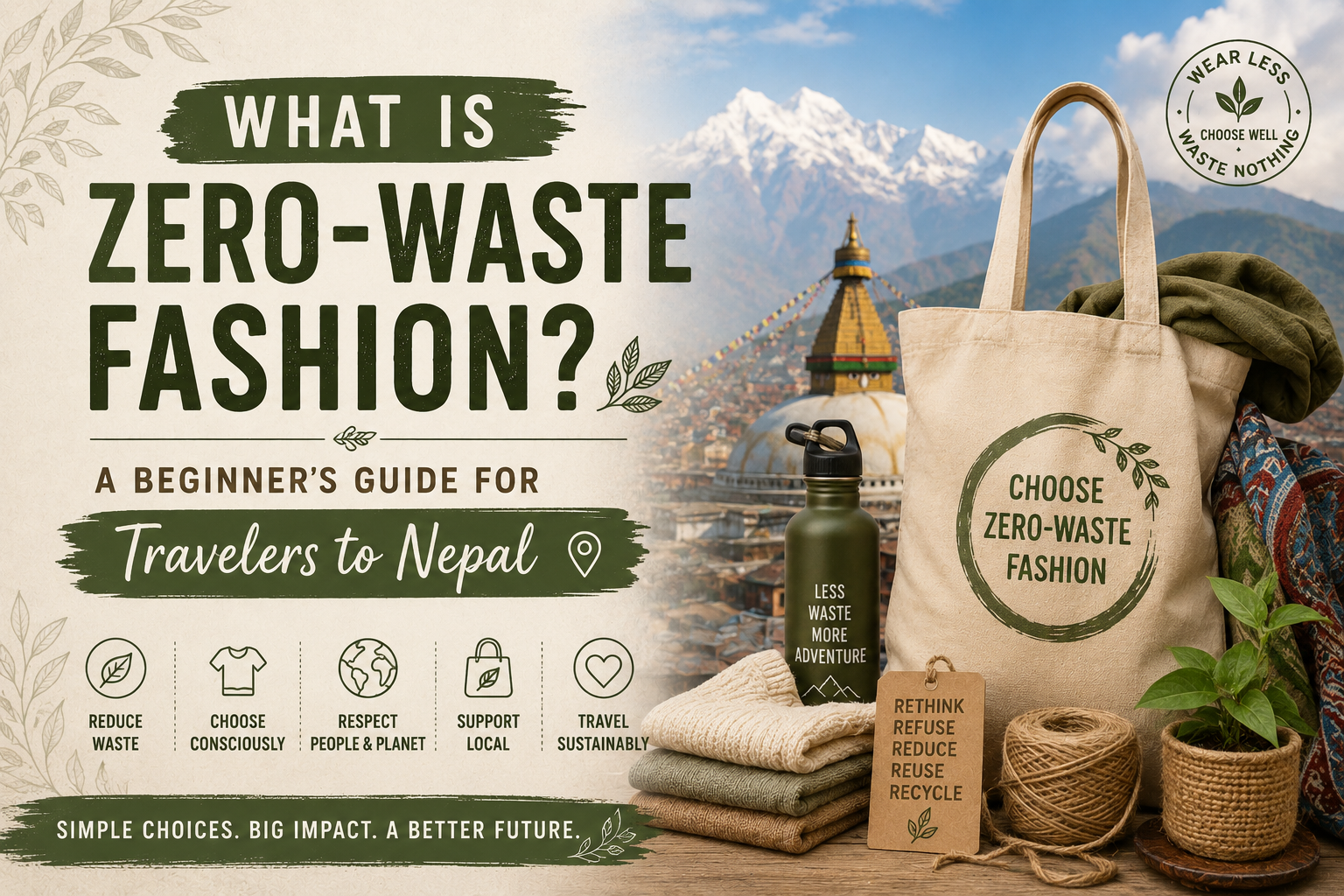
If you’re planning a trip to Nepal, you’ve probably added Everest Base Camp or the Annapurna Circuit to your list. But there’s another side of Nepal worth exploring before you even hit the trail: a textile tradition that’s been practicing “zero waste” for centuries, long before the term became a sustainability buzzword. Understanding what zero-waste fashion actually means will help you shop smarter, pack lighter, and bring home something with real cultural value, not just another souvenir.
What Is Zero-Waste Fashion, Exactly?
Zero-waste fashion is a design and production philosophy that aims to eliminate textile waste at every stage of a garment’s life, from cutting fabric to selling the finished piece. In a standard clothing factory, roughly 15% of fabric ends up as scrap on the cutting-room floor. Zero-waste design avoids this by planning garment patterns so that every inch of cloth is used, or by building new pieces entirely from reclaimed and leftover materials.
There are generally two approaches:
- Pre-consumer zero waste designers plan patterns so pieces of fabric interlock like a jigsaw puzzle, leaving little to no scrap behind.
- Post-consumer zero waste makers use existing textiles: deadstock fabric, factory remnants, or secondhand cloth, so nothing new has to be produced from raw material.
Both approaches share the same goal: keeping textiles in use and out of landfills, while supporting the people who make them by hand.
Why Nepal Is a Natural Home for Zero-Waste Fashion
For travelers, this isn’t an abstract concept; it’s something you can see and touch in Kathmandu’s alleyways and hillside workshops. Long before “sustainable fashion” was a marketing term, Nepali weaving traditions were built around using every part of the material.
Dhaka weaving. The bold, geometric cotton fabric known as Dhaka, most recognizable on the traditional Dhaka topi cap, is still handwoven on wooden looms in places like Palpa and the Kathmandu Valley. Traditional handloom production naturally minimizes offcuts compared to industrial cutting.
Allo (nettle) and hemp fiber. In the mid-hills, communities have spun cloth from Himalayan nettle and hemp for generations. These fibers require no pesticides, little water, and grow without much intervention, making them some of the most genuinely low-impact fabrics in the world, and they’re a distinctly Nepali answer to “sustainable material.”
Upcycled and scrap-based products. Small ateliers around Kathmandu and Bhaktapur now turn vintage silk saris, deadstock fabric, and weaving offcuts into bags, scarves, and accessories, extending the life of materials that would otherwise be discarded.
Fair trade cooperatives. Organizations such as the Fair Trade Group Nepal and grassroots collectives like Local Women’s Handicrafts and WSDO train and employ women artisans, tying zero-waste production directly to livelihoods rather than just aesthetics.
For a trekker or cultural traveler, this means a Dhaka scarf, hemp bag, or handwoven shawl bought in Thamel or a village market isn’t just a souvenir; it’s a piece of a production chain that’s been low-waste by necessity and tradition, not trend.
How to Recognize Genuine Zero-Waste and Sustainable Products While Traveling
Not everything marketed as “eco” in a tourist shop lives up to it. A few practical checks can help:
- Ask about the material. Genuine hemp, Allo, or handwoven cotton feels slightly coarser and more irregular than mass-produced fabric; that texture is part of the process, not a flaw.
- Look for handloom marks. Slight variations in weave density are a sign of a manual loom, not a factory line.
- Ask where it’s made. Small workshops in Bhaktapur, Palpa, and the Kathmandu Valley are often happy to explain their process; vague answers are a red flag.
- Check for cooperative or fair trade affiliation. Shops connected to known women’s cooperatives tend to be transparent about sourcing and wages.
- Favor scraps-into-products items. Scrunchies, patchwork bags, or pouches made from fabric remnants are a clear, visible sign of zero-waste practice.
Why This Matters Beyond the Shopping Bag
The global fashion industry is one of the most resource-intensive on the planet, and fast fashion’s throwaway culture has accelerated textile waste worldwide. Choosing handwoven, upcycled, or fair trade Nepali textiles pushes back against that model in a small but meaningful way. It also connects your trip to something deeper than sightseeing: supporting artisan communities in the hill regions and valleys you may be trekking through helps sustain traditional skills that are otherwise at risk of disappearing as younger generations move toward factory work or migrate abroad.
If sustainable and cultural travel appeals to you, it’s worth building time into your Nepal itinerary, whether that’s a Kathmandu Valley cultural tour, a village stay near a weaving community, or simply an afternoon exploring Patan and Bhaktapur’s craft lanes to see these practices firsthand rather than just buying the end product.
Practical Tips Before You Shop
- Bring space in your luggage, but don’t overbuy; the zero-waste ethic extends to your own consumption habits, too.
- Ask for care instructions. Natural-fiber weaves like Allo and hemp often need gentler washing than synthetic blends.
- Bargain respectfully. Handmade textiles take significant time to produce; a fair price supports the artisan, not just the shop.
- Keep receipts or ask for a card from cooperative shops if you want to reorder or recommend them to other travelers.